Dino Bros turns every move into a teamwork puzzle, as two dinosaur siblings travel together while chasing coins and the exit. Their shared movement creates the game’s strongest hook. A step that helps one dinosaur may place the other in danger. You must think ahead before pressing a key.
Each stage asks you to guide both brothers through compact platforming layouts. Collect every coin first, then reach the exit together. The goal sounds simple, but walls, gaps, tight spaces, and later hazards make every route matter. Dino Bros runs directly in the browser, and you can play Dino Bros online when you want a quick puzzle session.
Martin Magni created this 2024 puzzle platformer around careful movement rather than speed. Short stages make it easy to retry a plan, test a route, and improve your next attempt. Use the advice below to read levels faster and secure cleaner clears.
Dino Bros Overview and Core Objective
Two Dinosaurs, One Move
Dino Bros controls two dinosaur siblings at the same time. Both characters move whenever you make an input, so the game never becomes a normal single-character platformer. You cannot send one brother ahead and leave the other behind. Every move must suit both positions.
That shared rhythm creates the main puzzle. A move to the right might place the taller dinosaur beside a wall while the shorter dinosaur still has room. A move upward might help one brother reach a ledge but leave the other below it. Study both bodies before committing.
Player 1 can use WASD to move or use the Arrow Keys. Mouse control also works through click and drag. Whatever input you choose, treat each action as a joint decision. Speed rarely solves a stage faster than a careful route.
Start by identifying where each dinosaur stands. Then picture the result of one move for both. This small pause prevents many careless turns. It also helps you spot spaces where one character fits, but the other cannot follow.
Coin Collection and Exit Rules
The core loop has two clear requirements. Collect every coin in the level, then guide both dinosaurs to the exit together. Reaching the endpoint early does not replace the collection step. A missed coin can keep the stage from being cleared.
Plan coin routes before chasing the nearest pickup. One coin may sit beyond a narrow turn, while another may require a wider approach. Keep both brothers aligned with the route, and check the exit position after each collection. The final approach must work for both characters.
Why the Puzzle Setup Works
Dino Bros makes ordinary movement feel strategic. Each input changes two positions, two clearances, and two possible routes. That rule keeps stages readable while adding real pressure. You solve the level by arranging both brothers correctly, not by moving one character quickly.
Mastering Dino Bros Movement and Positioning
Shared Movement Rhythm
Think in paired moves, not individual steps. When you press a direction, both dinosaurs respond together. Their starting positions may differ, but the input still affects them at the same time. That turns a simple walk into a small prediction exercise.
Before moving, scan the next space for both brothers. Ask whether each one has a clear landing area. Then check the move after that. A safe first step may create a bad second step if one dinosaur reaches a wall too soon.
Use short movement sequences near coins and corners. Long holds can carry both characters past a useful stopping point. Small inputs give you more chances to compare their positions. They also make it easier to keep the pair near the center of a planned route.
WASD and Arrow Keys provide the listed keyboard options. Mouse click and drag gives you another verified way to move. Pick the method that lets you make controlled inputs. The best control choice is the one that helps you count movement clearly.
Watch the pair after every important turn. Do not assume that matching horizontal positions means matching safety. One brother may face an open lane while the other faces a wall. Check both bodies before continuing toward the next coin.
Using Height Differences
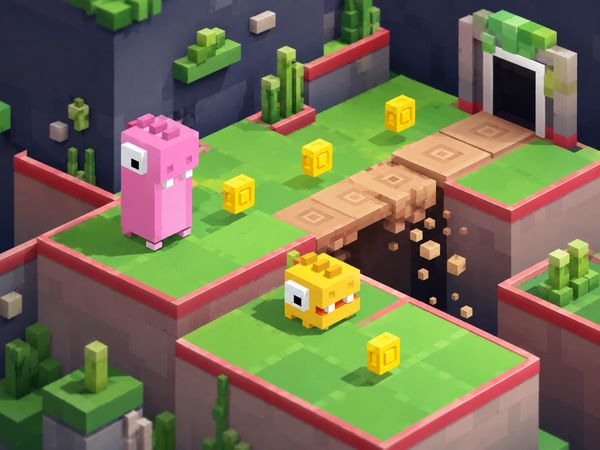
The Fancade wiki describes a taller pink dinosaur and a shorter yellow dinosaur. Their different heights affect tight spaces. The pink dinosaur needs more room, while the yellow dinosaur may fit through a lower opening or a narrower route.
Use the shorter yellow dinosaur as a clue when checking cramped areas. If yellow appears comfortable but pink looks boxed in, stop before pushing forward. The taller pink dinosaur often determines whether the pair can continue. Plan the route around the larger body first.
Look at ceilings, walls, and ledges from both sides. A space that looks open for one brother may fail for the other. Height differences also change how you approach coins. Enter tight areas slowly, and leave enough room to turn both characters around.
Resetting Bad Positions
Recognize a failed setup early. If one dinosaur sits against an awkward wall, further moves may only reduce your options. Restarting quickly protects your time and clears the mental clutter from a poor route.
After a reset, change the first decision rather than repeating it. Try a wider approach, a different coin order, or a shorter movement burst. The goal is not faster movement. It is a better shared position.
Dino Bros Hazards and Late-Level Gimmicks
Falling Platforms After Move Counts
Later Fancade levels can add platforms that fall after a certain amount of moves. These platforms turn movement into a counting problem. You cannot linger while deciding which coin to collect next. Every extra step may reduce the safe time available on the platform.
Count your intended moves before stepping onto a falling platform. Include turns, corrections, and the movement needed for both brothers to leave. A route that works in open space may fail here because hesitation uses part of the platform’s move limit.
Do not treat the platform as a place to explore. Enter with a clear destination. If the next safe surface lies left, plan the leftward sequence before landing. If a coin sits nearby, decide whether collecting it fits the same route.
The shared movement rule makes these platforms harder. Both dinosaurs consume the move count together, even when only one appears to advance toward danger. Watch the pair’s spacing and avoid unnecessary backtracking. A clean route protects the platform and keeps the exit plan intact.
Periodic Spikes
Periodic spikes add timing to the route. Their danger changes as you move, so standing near them requires more care than crossing an empty floor. Do not rush simply because the path looks short.
Study the spike pattern before committing. Choose a stopping point that keeps both brothers away from the hazard. Then move through during a useful opening, using only the inputs needed for the next safe area.
Count movement around the spikes. One extra step can shift the pair into danger, especially when a wall limits the taller pink dinosaur. Let the shorter yellow dinosaur’s position help you judge the available space, but always protect both characters.
Buttons That Lift Platforms
Certain buttons move a platform up. That changes the map layout and can open a path that was blocked earlier. Treat the button as part of the route, not as a side action.
Check where both dinosaurs will stand after the platform rises. Then choose the next move with the new layout in mind. A lifted platform helps only when the pair can reach and use the space it creates.
Try Dino Bros here and test each late-level route with care.
Dino Bros Level Routes and Coin Order
Reading the Map Before Moving
Pause at the start of every stage. Find the coins, the exit, and the spaces that limit movement. Then locate the areas where both dinosaurs must share one route. This quick scan often reveals the correct order before you press anything.
Trace a path from the starting position to the exit. Mark tight corners, raised sections, and any place where one dinosaur may stop. Next, connect each coin to that path. If a coin forces a detour, decide how both brothers will enter and leave it.
Think about the return route as well. A coin near a wall may be easy to reach but hard to leave. The exit also needs a two-dinosaur approach. Do not plan only the final step; plan the pair’s positions one or two moves earlier.
Use the map’s open areas as turning zones. Wider spaces let both brothers realign before a narrow section. Save those spaces for corrections instead of spending them on random movement. Good routes reduce both distance and risk.
Coin Paths That Block the Exit
Some coin routes can interfere with the exit approach. Collecting a nearby coin first may place one brother on the wrong side of a wall or ledge. Check the exit lane before taking an attractive shortcut.
Choose coin order by access, not distance. A farther coin may open a cleaner line through the stage, while the closest coin may create a dead end. Keep the exit requirement visible in your plan, since both dinosaurs must arrive together after every coin is collected.
When two coins sit along different branches, decide which branch allows an easy return. Move into a branch only when both brothers have enough room to leave it.
Safe Stopping Points
Stop in open areas, beside clear walls, or before narrow turns. These positions give both dinosaurs room for the next input. Avoid stopping with one brother pressed against a corner.
Use each safe point to recount the remaining coins and route. A brief check can prevent a full restart later.
Platform Differences in Dino Bros
Fancade Quest Version
Dino Bros appears in Fancade documentation as a Quest game. That version lists 50 levels. Its later stages are also the build tied to the named advanced hazards: periodic spikes, falling platforms after move counts, and buttons that move a platform up.
This makes the Fancade version useful for players who want a compact puzzle run with a clear difficulty rise. Early stages teach the shared movement idea. Later stages ask you to count moves and read changing routes more carefully.
The 50-level listing gives this version a defined scope. It does not match every release description for the game, so avoid treating that number as a universal total. Build details matter when you compare progress or discuss how much content remains.
The Quest structure adds a set path through the stages, while the later hazards test whether you can plan under tighter movement limits.
Use the Fancade route as a practice ground for precise inputs. Watch how a button changes a platform’s position. Count steps on unstable platforms. Learn when periodic spikes allow a safe crossing. Those habits make the shared movement system easier to manage.
What Changes Between Builds
The broader release information also includes offline play and a one-time purchase that removes ads. The main puzzle remains familiar across the documented versions: both dinosaurs move together while they collect coins and seek the exit.
When comparing builds, focus on the level listing tied to that release.
Short Session Strategy for Cleaner Clears
Planning Two Moves Ahead
Look beyond the next input. Predict where both dinosaurs will stand after it, then picture the following move. This simple habit catches blocked routes before they waste a life or restart.
Use coins as planning markers. Before collecting one, ask where the pair will land and which direction remains open. If the next move traps either brother, delay the pickup and approach from another angle.
Keep your movement bursts short near corners. Two careful inputs often beat one long hold. Check the pink dinosaur’s clearance first, then confirm that the yellow dinosaur still has room to follow.
Avoiding Dead Ends
Do not enter a narrow branch without checking its exit. A coin at the end may look valuable, but the pair still needs a shared way back.
Watch for positions that separate the brothers against different walls. If one move removes every useful direction, stop before taking it. Safe open ground gives you more choices.
When to Restart Fast
Restart when a falling platform has consumed too many moves. Continuing rarely repairs a route that already missed its count.
Restart after a bad corner entry, too. A clean reset usually takes less time than forcing both dinosaurs through a trapped position.
Use the next attempt to change one choice. Test a new coin order or approach, then compare the result.
Compare with Similar Games
| Game |
Why Similar |
| Bad Ice Cream |
Both games are level-based puzzle-platformers where you collect items in a stage to unlock progression to the exit. |
| House of hazards |
Both involve navigating a stage while avoiding hazards and interacting with environment elements that block or alter movement. |
✨ Key Features of Dino Bros
- Synchronized movement
- Coin collection
- Exit-gated progression
- Periodic spikes
- Falling platforms
- Platform-lifting buttons
How to Play Dino Bros
Step 1: Use the game controls
Use WASD to move. Use Arrow Keys to move. Use Mouse click and drag to move.
Step 2: Start by reading the whole room
Before moving, study coin positions, exits, and blocked paths. Because both dinos move together, one bad step can create a shared problem.
Step 3: Plan for both bodies, not one
Choose routes that keep the tall and short dinosaurs usable. A path that helps one dino but traps the other is usually a mistake.
Step 4: Collect coins in a clean order
Take coins in the sequence that leaves an easy return path. If a coin closes off the safest route, leave it for last.
Step 5: Use height and corners carefully
In tighter spaces, think about how the different-sized dinos fit around edges and gaps. Small positioning errors matter because movement stays synchronized.
Step 6: Respect late-level hazards
In later Fancade stages, count your moves and watch for spikes and rising platforms. Those systems punish hesitation and sloppy pathing.
Step 7: Restart quickly when the route fails
If one move ruins the setup, restart before the level becomes messy. Fast restarts help more than forcing a broken plan.
Dino Bros FAQs
What are the basic controls for Dino Bros?
Browser keyboard: Player 1: WASD — move; Player 1: Arrow Keys — move. Browser mouse: Player 1: Mouse click and drag — move.
Can I play Dino Bros on mobile devices?
Yes. Dino Bros has a mobile release through Google Play, App Store.
Does Dino Bros require a separate installation?
No. The browser version of Dino Bros runs on the page without a separate installation.
What is Dino Bros?
Dino Bros is a puzzle platformer about guiding two dinosaur brothers through levels together. The goal is to collect all coins and reach the exit, while keeping both dinos moving in sync.
Conclusion
Dino Bros is a clever singleplayer puzzle platformer built around teamwork between two dinosaur brothers. They move in sync, so every step must work for both characters, making route planning more important than speed. Their different heights add another layer of thought: the taller pink dinosaur and shorter yellow dinosaur may fit in different spaces, shaping how each puzzle is solved.
As you progress, platforms can fall after a certain number of moves, while buttons move platforms up and change the available paths. The result is a focused test of timing, positioning, and careful decisions. Move with WASD, the Arrow Keys, or mouse click and drag. Play Dino Bros here and see how cleverly you can guide both brothers together.

No comments yet. Be the first to share your thoughts!