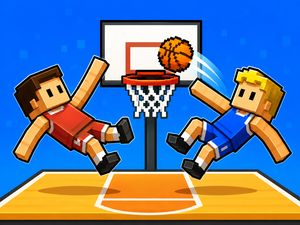
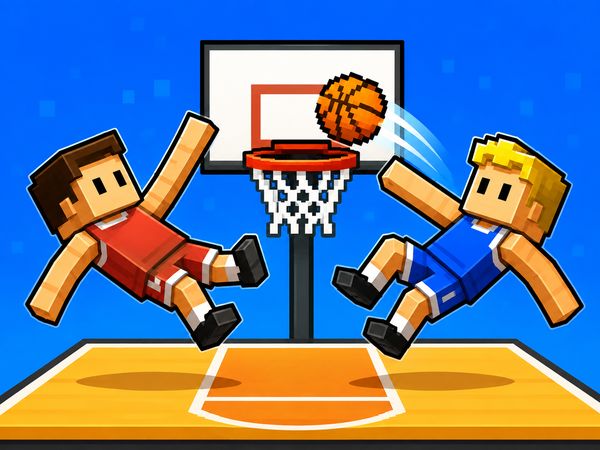
Basket Random turns basketball into a frantic ragdoll duel where one button controls every big moment. Players jump, shoot, and block with floppy movement. A clean dunk can become a wild rebound seconds later. Each basket also brings a fresh court or changing setup, so no round stays comfortable for long.
The goal stays simple: reach five points before the other team. The route there feels unpredictable, though. Random physics can send players tumbling, bend a shot away from the hoop, or create a lucky block near the rim. Short rounds keep the score moving and make every basket matter.
Released in April 2020, Basket Random fits quick browser sessions and local matchups. Learn the controls, watch the court, and react instead of forcing the same move. Start playing Basket Random online now and see how quickly one point can change everything.
Basket Random and Its Ragdoll Basketball Formula
Why the matches feel chaotic
Basket Random replaces smooth basketball movement with unstable ragdoll physics. Your player does not move like a precise athlete. Arms, legs, and the ball can shift at awkward angles during a jump. That looseness creates the game’s biggest surprises.
Press the control at the wrong moment, and your player may float past the ball. Press it during a close contest, and the same movement can become a useful block. Rebounds rarely look planned. A ball may bounce into reach, touch a player, and roll toward the hoop without either side fully controlling it.
The single-button design makes this chaos easy to enter. One input handles jumping, shooting, and blocking. You focus on position and timing rather than a long move list. That keeps each exchange fast, even when the players flop across the court.
Random physics also changes how you judge risk. A high jump may challenge a shot, but it can leave your player out of position. A low movement may miss the ball, yet still interrupt the opponent. Read the current motion first. Then choose the moment that gives your player the best chance.
Every point can feel different because the game does not reward perfect repetition. The same press may produce a strong shot in one situation and a strange deflection in another. That uncertainty gives Basket Random its arcade edge. You play for control, but you also react to the mess.
What makes each round readable
The action looks wild, but the main goal remains clear. Protect your hoop, reach the ball, and send it toward the other basket. Watch the players’ height and direction before pressing the button. A jump that starts too early can miss both the ball and the block.
The court gives you useful clues. Notice where the ball falls, where your opponent lands, and how much space remains near the rim. Then act on the next opening. Basket Random feels random without becoming hard to understand because every round still centers on possession, positioning, and the next shot.
Basket Random gameplay
Player 1 and Player 2 bindings
Basket Random keeps its keyboard layout easy to remember. In a single-player match, the Arrow Keys move your player. For a local two-player match, Player 1 uses WASD, while Player 2 uses the Arrow Keys. These bindings let both players share one keyboard without adding a large control scheme.
Player 1 should keep the WASD area clear. Player 2 needs room around the Arrow Keys. Before the first point, confirm who controls each side. That small step prevents late reactions caused by reaching for the wrong keys.
The game also uses one button for the main action. The same single button handles jumping, shooting, and blocking. Its result depends on your position and timing, not on separate commands for each move. Stay near the play, then press when the ball or opponent enters your reach.
Player 1 can use movement to approach the ball with WASD. Player 2 can mirror that plan with the Arrow Keys. Do not hold movement without watching the screen. Ragdoll motion can carry a player farther than expected, especially during a jump.
Local play becomes more interesting when both players understand this limit. Neither side has a complex control advantage. Smart timing matters more than memorizing inputs. Use short movements near the hoop, and avoid wasting the action button before the ball arrives.
Timing jumps, shots, and blocks
Press near the ball’s path, not simply whenever it rises. A well-timed jump can reach a loose ball or challenge a shot. A press near the rim may turn into a block, while the same action farther away can launch an awkward attempt.
Track the opponent’s body as closely as the ball. If they jump first, wait for the ball to enter your space. If they land badly, move into the opening. Let the ragdoll motion settle before pressing again. Quick reactions help, but rushed inputs often create empty jumps.
How the Five-Point Match Works
Scoring first in each round
Each round focuses on one basket. Send the ball through the hoop, and your team gains a point. The game then moves into the next exchange, keeping the contest compact and easy to follow. You never need to track a long clock or manage a large score gap.
The first point can come from a direct shot, a rebound, or a messy collision near the rim. Treat every loose ball as dangerous. A player who appears out of position may still reach the hoop through ragdoll movement. Stay alert until the ball clearly leaves the scoring area.
After a basket, the court or other random elements may change. That shift stops one successful tactic from working forever. A jump that worked on the previous court may now need different timing. Look at the new layout before acting, even when the score favors you.
Pressure builds because each point moves the match closer to its finish. A missed chance gives the opponent another opening. Protect your side first, then attack when the ball comes within reach. This balance makes short rounds feel active from the opening press.
Winning the full match
The match ends when one team reaches five points. It is not decided by total score alone or by simply leading after a fixed exchange. Both players must race toward that finish line.
A narrow lead still matters, but it never guarantees the result. One clean basket can change the next court and shift the momentum. Keep playing each round with the same focus. The five-point target creates constant pressure without making the match feel drawn out.
Try Basket Random right here and chase the first five-point win.
Random Courts, Characters, and Changing Physics
Court swaps after baskets
A successful basket does more than change the score. The court and its surroundings can change after baskets or between rounds. Treat each swap as a new problem instead of expecting the last setup to return.
Start by checking the space around both hoops. Look at the ball’s likely path, then notice how much room your player has to jump. A familiar position may feel different when the court changes. The ragdoll system makes that adjustment even more important because small spacing differences affect contact.
Do not rush into the first press after a swap. Give yourself a brief moment to read the new scene. If the ball sits high, prepare for a jump. If it drops near a player, use a short action and avoid overcommitting.
Court changes also punish fixed plans. You cannot rely on one safe shot or one repeated block. Adapt your position after every basket. When defending, stay close enough to challenge the hoop. When attacking, watch for the route that the current court offers.
The score can help guide your risk. A team chasing the final point may need a bold jump. A team protecting a lead can wait for the opponent to make a mistake. Neither choice works automatically, though. The new court decides which response makes sense.
Shifting player shapes and movement
Changing player designs keep the visual feel fresh between exchanges. Their ragdoll bodies still move with floppy, unstable physics. That movement affects the timing of every jump and collision.
Watch the body’s direction, not only the feet. A player leaning forward may reach the ball sooner than expected. A wide, awkward pose can block space near the hoop. Adjust your press to the motion on screen, and let each new design show you how the action looks.
Basket Random Multiplayer Mindset
Reading your partner and opponent
Basket Random rewards players who watch the other side before pressing. In a two-player matchup, the opponent’s movement reveals their next chance. If they drift toward the ball, guard the space near your hoop. If they jump early, prepare for the rebound that follows.
Local play also creates a partner-like rhythm between two sides. You may attack during one exchange, then defend immediately after a missed shot. Do not assume the same role for the whole round. The ball decides who needs to move first.
Use the opponent’s habits as clues, not guarantees. A player who always jumps high may leave a lower path open. Someone who waits near the rim may struggle with a ball that lands behind them. Change your timing when they adjust.
Communication helps in local matches, but clear screen reading matters more. Call out a loose ball if needed. Then watch the result instead of following a plan blindly. Ragdoll collisions can change possession in one instant.
Strong players also manage frustration. A strange bounce does not end the point. Reset your position, protect the hoop, and wait for the next opening. The game favors quick recovery because the next basket may arrive almost immediately.
Solo versus local two-player pressure
Solo play lets you focus on one side while the opposing player follows its own movement. Local two-player play adds direct human reactions. Your opponent may bait a jump, change direction, or attack a mistake at once.
Use solo matches to learn spacing and timing. Then bring that knowledge into local play. Against another person, stay flexible. Their decisions can break patterns that feel reliable against the computer.
Basket Random on Browser and Mobile
Google Play and App Store availability
Mobile play suits quick rounds and touch-focused sessions. The browser and mobile listings share the game’s central identity: ragdoll movement, random court changes, and two-player basketball pressure.
For more quick action after your match, browse the Action section here.
Play Basket Random here now and see who reaches five first.
✨ Key Features of Basket Random
- One-button control
- Ragdoll physics
- Random courts
- Changing player designs
- First to 5 points
- Two-player matchups
How to Play Basket Random
Step 1: Use the game controls
Use Arrow Keys to move. Use ًWASD to move. Use Arrow Keys to move.
Step 2: Start with your side’s single button
Use W for Player 1 or Up Arrow for Player 2. Pressing that button makes your team jump and react at once.
Step 3: Aim for the first clean basket
Do not chase perfect setups. In Basket Random, the first usable opening often matters more than a long build-up.
Step 4: Hold position near the ball
Stay close enough to contest loose balls and rebounds. The ragdoll movement can carry you into a scoring chance by accident.
Step 5: Use blocks as often as shots
Your button also helps stop opponent attempts. A well-timed jump can disrupt their lane and force a bad bounce.
Step 6: Adjust after every basket
Expect the next round to feel different. Court changes and shifting player designs can make the same timing fail.
Step 7: Play for five points, not perfection
Each round is just one step toward the match win. Keep pressure on every possession until one side reaches five.
Basket Random FAQs
What are the physics like in Basket Random?
They are random and ragdoll-like, which makes movement floppy and unpredictable. That chaos affects jumping, shooting, blocking, and how the ball bounces around the court.
Conclusion
Basket Random is a physics-based arcade basketball game built around quick rounds and unpredictable action. In multiplayer, the match ends when one team reaches five points, keeping every basket important and creating constant pressure. Random court changes after baskets or between rounds force players to adapt instead of relying on one safe pattern.
Ragdoll physics make movement floppy and unstable, turning rebounds, blocks, and shots into wonderfully chaotic moments. Player 1 moves with WASD, while Player 2 uses the Arrow Keys, making it easy to compete on one keyboard. With its fast matches, changing surroundings, and amusingly awkward physics, Basket Random is great for quick contests and repeat play. Start a match and play Basket Random right here on this page.

No comments yet. Be the first to share your thoughts!