House of hazards turns a household chore race into a frantic trap battle. You move through the house, handle tasks, and dodge hazards while another player tries to ruin your run. Every safe step can become a sudden mistake.
New Eich Games launched the browser game in September 2020. The local multiplayer design keeps both players involved, even when one person controls the action and the other creates trouble.
Choose your movement carefully, watch the room, and react before a hazard catches you. If you want quick rounds and constant rivalry, play House of hazards online here now.
House of hazards Core Loop and Win Pressure
Chores Under Pressure
House of hazards builds its match around household chores. You race through the home while trying to complete the work that moves your run forward. That sounds simple until the other player starts controlling the house against you.
Movement matters because every task creates a vulnerable moment. You may need to cross an exposed area, pause near an object, or approach a room from an awkward angle. Rushing blindly makes those moments worse. Take a second to read the space before committing.
The strongest player keeps two goals in mind. Make progress on chores, then stay ready for interference. A task means little if a trap interrupts you before you can continue. Treat each chore as a small race inside the larger match.
Sabotage Timing
Player sabotage gives the game its sharpest tension. The attacking player should wait for movement, not waste every chance immediately. A hazard placed while the rival stands safely away may achieve nothing.
Good timing turns ordinary movement into danger. Watch for a player entering a narrow area or focusing on a chore. Then choose hazard selection or trap setting at the moment that limits escape. Defenders should vary their pace and avoid predictable routes.
Round-to-Round Escalation
Each round teaches both players more about the house. You learn which routes feel safe and which moments invite attacks. Rivals learn your habits too.
That shared knowledge raises the pressure. A familiar path may work once, then fail when the opponent expects it. Change your timing instead of repeating the same approach.
House of hazards Controls and Movement Rhythm
Player 1 and Player 2 Inputs
Player 1 uses the left side of the keyboard. Press A to move left and D to move right. Press S to crouch or fire. Press W to jump.
Player 2 uses a separate cluster. Press J to move left and L to move right. Press K to crouch or fire. Press I to jump.
These layouts keep two players on one keyboard. They also make hand position important. Set your fingers before the round starts, especially when both players act quickly.
Do not treat movement as a simple left-right race. The crouch/fire input shares one key, so you must read the situation before pressing it. Jumping also needs a purpose. Use it to change your position, not just because the house looks dangerous.
Small inputs often decide a close exchange. Hold a direction too long and you may enter danger. Release at the right time, then prepare the next action. A clean rhythm beats frantic key presses.
When to Crouch, Grab, or Jump
Use crouch when a lower position helps you manage the current threat. Use the shared crouch/fire input only when you understand what that press does in the moment. Jump when a hazard or route demands a quick change in height.
Focus on movement, crouching, firing, and jumping. Watch your opponent’s posture before choosing your response.
Try House of hazards right here when you want a fast local match with someone nearby.
Trap Placement and Counterplay
Using the House Against Rivals
Trap setting works best when it supports the rival’s mistake. Do not place hazards at random. First watch how the opponent travels through the house. Notice where they slow down, change direction, or focus on a chore.
Then use hazard selection with a clear purpose. A trap near a busy route can force a choice. The rival may continue and risk contact, or change course and lose time. Either result gives you useful control.
Strong sabotage also uses patience. Let the opponent believe a route stays safe. Wait until they commit, then create pressure. The best attack often comes from a quiet setup rather than constant action.
Reading Openings
Look for openings during transitions. A player leaving one area may stop watching the next space. Another player may also focus too closely on a household chore.
Use those moments to reposition before setting a trap. If the rival reacts early, cancel the attack and keep your distance. Flexibility matters more than forcing one plan.
Protecting Your Own Run
Protect progress by checking the room before every committed move. Avoid repeating the same timing twice. When a rival waits near your route, slow down and make them reveal the threat.
Keep your path unpredictable. Safe progress comes from awareness, not speed alone.
Multiplayer Roles and Party Flow
Local Rivalry
House of hazards works best when both players stay involved. One player handles the household race while the other creates pressure through hazard selection and trap setting. That role can change quickly after a mistake.
Local rivalry makes every decision visible. Your opponent sees when you hesitate, which route you prefer, and how you respond to danger. Use that knowledge without becoming predictable yourself.
Keep communication brief during shared play. Calling out a route may help one player, but it also reveals intent. Sometimes silence creates the stronger advantage.
Gamepad-Supported Extra Players
Treat the gamepad as a separate control option rather than assuming its labels match those keys.
How Group Size Changes Decisions
More people create more distractions around the house. A player may watch the wrong movement and miss a trap opportunity. Keep your attention on the active route and the current chore.
With fewer distractions, each pause becomes easier to punish. Match your pace to the group instead of racing every second.
Winning by Managing Chaos Better
Task Priorities
Start each run by identifying the nearest useful chore. Avoid crossing the whole house without a reason. Short movement reduces the time your rival gets to prepare a response.
When two routes look possible, choose the one with better visibility. You need room to react, not just a direct line. Finish safe progress before chasing a risky shortcut.
Trap Awareness
Scan the space before entering it. Look for unusual pauses from the rival, sudden movement, or a route they keep protecting. Those signs may show where they want you to go.
Change speed near danger. A brief pause can expose a trap’s timing, while a sudden direction change can spoil the setup.
Turning Mistakes into Momentum
A mistake does not end your decision-making. Use the recovery moment to study the rival’s position. They may expect you to repeat the same route after recovering.
Instead, reset your approach. Take a different line, vary your timing, and return to the chore when the pressure shifts. One failed move can reveal the safest next move.
Compare with Similar Games
| Game |
Why Similar |
| Happy Wheels |
Both are multiplayer obstacle-dodging games where players must move through hazard-filled stages while avoiding traps. |
✨ Key Features of House of hazards
- Local multiplayer
- Household chores
- Hazard selection
- Trap setting
- Unity WebGL
How to Play House of hazards
Step 1: Use the game controls
Use A to move left. Use D to move right. Use S to crouch/Fire. Use W to jump.
Step 2: Move with purpose
Use your movement keys to reach the next chore quickly. Do not sprint blindly into the house’s obvious danger points.
Step 3: Watch your timing
Jump only when the obstacle really requires it. Crouch or grab when a hazard or rival is close enough to punish.
Step 4: Use hazards against opponents
When you are the disruptive player, wait for clean openings. A well-timed hazard is more valuable than a rushed one.
Step 5: Recover immediately after mistakes
If you get knocked down, reset your route at once. The game rewards players who keep moving instead of hesitating.
House of hazards FAQs
What are the basic controls for House of Hazards?
Browser keyboard: Player 1: A — move left; Player 1: D — move right; Player 1: S — crouch/fire; Player 1: W — jump; Player 2: J — move left; Player 2: L — move right; Player 2: K — crouch/fire; Player 2: I — jump.
Does House of hazards require a separate installation?
No. The browser version of House of hazards runs on the page without a separate installation.
Conclusion
House of hazards is a 2020 local multiplayer party game by New Eich Games, delivered in the browser through Unity WebGL. Its appeal comes from bringing two players together for lively, competitive sessions that reward quick reactions, coordination, and careful use of the keyboard. The straightforward setup makes it easy to start playing with a friend and keeps the focus on the shared experience.
Player 1 moves left and right with AN and D, jumps with W, and uses S to crouch/fire. Player 2 uses J and L to move, I to jump, and K to crouch/fire. With its accessible controls and engaging local multiplayer format, House of hazards is a great choice for a quick burst of fun. Gather a friend and play House of hazards right here on this page.
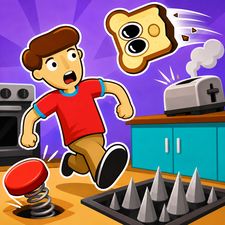
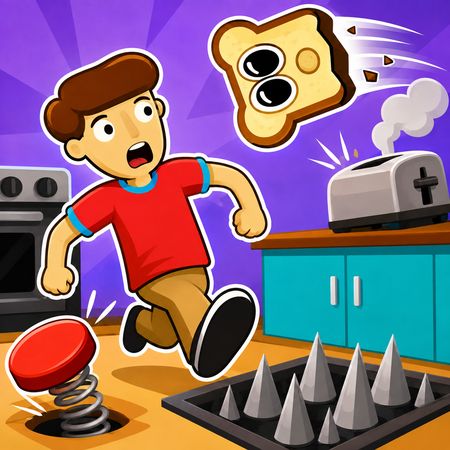
House of hazards Game Image

No comments yet. Be the first to share your thoughts!