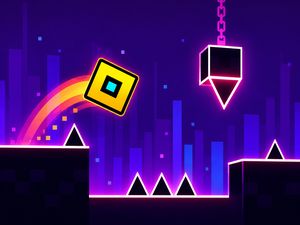
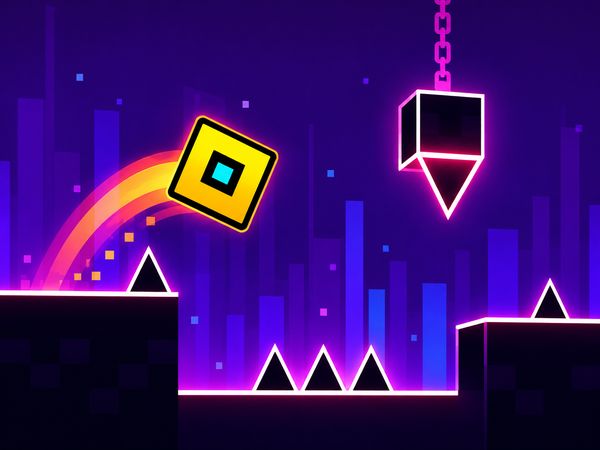
Dasmetry turns every jump into a split-second test of rhythm and control. This fast timing platformer asks you to read the path, react quickly, and keep moving after each reset. One tiny mistake can end a run. One clean sequence can feel amazing.
The game fits the browser rhythm platformer style. It focuses on short retries, careful movement, and learning patterns through practice. You do not need long sessions. A few focused attempts can teach you something new. That makes Dasmetry a fun choice for players who enjoy a Geometry Dash style game.
You can start play Dasmetry online from a supported browser page without chasing a separate install. Try it here, watch the timing, and improve one obstacle at a time. This free browser game also suits desktop, mobile, and tablet browser play when the page loads correctly.
Dasmetry at a Glance
What the Game Feels Like
Dasmetry feels quick, bright, and focused. Your goal involves moving through a dangerous platforming path while matching each action to the right moment. The game does not need a huge rulebook. You learn by watching, trying, failing, and trying again.
Each attempt gives you useful information. You may notice a hazard moving in a steady pattern. You may spot a safe landing area that needs a later jump. You may also learn that rushing creates more trouble than waiting for one beat. These small discoveries make each retry feel useful.
The clean movement creates the main excitement. A good run comes from control, not luck. You watch the space ahead, choose a response, and keep your timing steady. The action suits players who enjoy a music platformer with simple ideas and demanding timing.
Dasmetry also works well as a short-session game. You can play for a few minutes, stop, and return later. The basic challenge remains easy to understand. The hard part comes from making several correct moves in a row.
Some players search for a “Dashmetry game free” experience because they want quick browser fun. Dasmetry matches that search best when you want instant retries and no large setup. It feels closer to a focused timing game than a long adventure.
Why the Format Works
Short retries keep the action moving. A failed attempt does not need a long wait before the next try. You can remember the mistake while it still feels fresh, then test a better choice.
Pattern learning gives the game its strongest lesson. Hazards often reward careful watching. Once you understand their movement, the path feels less confusing. Your hands then follow what your eyes already know.
The simple format also removes distractions. You can focus on timing, spacing, and safe movement. That makes Dasmetry approachable for younger players, while the precise challenges still give skilled players something to master.
Who It Suits Best
Dasmetry suits patient players who like quick challenges. It also fits anyone who enjoys retrying one tricky section until it feels natural.
Fans of browser platformers, music platformers, and simple timing games should feel comfortable here. Players who dislike repeated attempts may need a little patience. Each reset teaches something valuable.
Core Movement and Timing
Reading the Rhythm
Start by watching the route before making fast choices. Look for repeating motion, changing gaps, and places where the path becomes narrow. You do not need to memorize everything at once. Learn the next small section first.
Rhythm helps because movement often follows a steady visual beat. A hazard may rise, fall, shift, or open a route at a regular time. Watch that cycle during an early attempt. Then act when the safe moment appears.
Keep your eyes slightly ahead of your character. Looking only at the current position makes every obstacle feel sudden. Looking forward gives your brain time to prepare. This small habit helps you choose smoother inputs.
Do not press wildly when the screen feels busy. Extra inputs can ruin a good approach. Take a breath, notice the pattern, and wait for the next clear opening. Players searching for RX games often expect quick reactions, but Dasmetry rewards smart reactions even more.
Listen to the game if its sound works on your device. Rhythm can support your visual reading. Still, trust the screen first. Browser sound may lag, or your device may play it differently.
Think of each section as a small lesson. First, find the pattern. Next, find the safe timing. Finally, repeat it until the movement feels easy. That process turns a confusing route into a series of simple choices.
When to Jump or Dash
Use movement inputs with purpose. Jumping too early can send you into the next danger. Jumping too late can leave no room to correct your path.
Watch the landing space, not only the hazard. A safe landing gives you time to prepare. A narrow landing may require a calmer approach. If you have a dash-style movement, save it for the moment that needs extra reach or speed.
Wait one beat when the route looks unclear. That pause may reveal the next safe opening. Good timing often beats fast fingers in a precision platformer.
Common Mistakes
Many players react to the obstacle they just saw. Look farther ahead instead. Others hold a button too long and lose control of their position.
Another mistake involves changing a working plan too quickly. If one timing almost succeeds, adjust it slightly. Do not invent a completely new move each time.
Start playing Dasmetry here, then test one timing change per attempt.
Mastering Dasmetry Controls
Keyboard Inputs
Dasmetry uses simple browser controls, though the exact keys may depend on the version shown on the page. Check the opening screen before your first serious attempt. Look for the displayed jump, move, or restart instructions.
Use a comfortable keyboard position. Keep your main hand near the shown action key. Rest your fingers lightly instead of pressing hard. Light fingers help you make quick changes without accidental holds.
If the game responds to arrow keys, start with those directions. If it shows another key, follow the on-screen guide instead. Do not assume every browser platformer uses the same layout.
Test each input safely before reaching a difficult section. Learn how one press feels. Then learn what happens when you hold it briefly. This check prevents confusion during a real run.
Keyboard play can feel precise on a desktop browser game. A larger screen also makes distant hazards easier to read. Keep the browser window clear, and remove extra tabs that might distract you.
If an input seems delayed, release the key fully. Check whether another page element has focus. A quick reload may also help when the game does not respond normally.
Mouse Use
Use the mouse only if the game displays mouse controls. Some browser games connect clicking with jumping or another action, but Dasmetry may show different instructions. Follow the controls written on the game screen.
Keep the pointer away from busy parts of the play area when possible. Accidental clicks can interrupt your focus. A steady hand works better than fast clicking.
Mouse play may suit players using a laptop without a comfortable keyboard. Test the click timing during an easy part. Then keep your clicks short and deliberate.
Searches for a Geometry game often mix many different control styles. Dasmetry still needs one clear habit: check its own instructions first.
Mobile Play
Dasmetry may work as a mobile browser game when the page supports touch input. Look for an on-screen control prompt. Do not expect desktop keys to work on every phone or tablet.
Hold the device firmly, keep your tapping hand relaxed, and play with enough screen brightness. A tablet browser game gives you more space to see the route. Rotate the device only if the page asks you to.
If touch feels delayed, reload the page and close heavy background tabs.
Hazards, Traps, and Mistakes to Avoid
Spike Timing
Spike-like hazards demand careful timing. Treat them as moving parts of the route, not as random surprises. Watch when the danger becomes safe to pass, then choose your movement.
Do not jump simply because you see a spike. Check the space beyond it. You need enough room to land, recover, and prepare for what comes next. A perfect jump into a bad landing still ends the attempt.
Try to notice the hazard’s full cycle. Watch it appear, move, and return. This gives you a better timing window than guessing from one moment.
Keep your character centered when the path allows it. A central position often gives you more room to react. Avoid hugging an edge unless the route clearly requires it.
Some players use “Dashmetry Wave” as a search phrase while looking for this kind of fast movement challenge. Whatever movement style appears on your screen, focus on the same lesson: watch the cycle before committing.
When a spike ends several runs, slow down. The answer may need a later input, not a faster one. Change one part of your timing and test it again.
Gap Mistakes
Gaps punish guesses. Check their width and the space around their landing point. A jump that reaches the far side may still fail if you touch the edge.
Use a clear takeoff point. Starting too close to a gap can reduce your control. Starting too far away may leave you short.
Watch the next obstacle before landing. This helps you avoid surviving one gap and immediately losing to the next hazard.
Restart Learning
Every reset shows a mistake. Remember its location and likely cause. Was your input early, late, too long, or too short?
Then replay that part with one small change. Treat resets like quick lessons, not punishments. This mindset keeps the game fun.
How Score and Progress Usually Work
Completion Goals
Focus first on reaching farther through the route. A complete run matters more than a flashy beginning. Each new section proves that your timing has improved.
If the game shows progress on its page, use that display as a simple guide. Do not assume it includes ranks, medals, or a leaderboard. The safe goal remains steady completion.
Break the route into landmarks. Remember where the screen changes, where hazards repeat, and where a landing needs extra care. These landmarks help you measure progress without guessing.
A strong completion goal can look small. Reach the next obstacle. Then pass it twice. After that, connect the next two sections. Small wins build a reliable full run.
Players who enjoy Geometry games often chase perfect routes. Dasmetry supports that same patient feeling through repeated practice. Keep your attention on clean movement, not only on reaching the end quickly.
Retry Efficiency
Make every retry answer one question. You might test whether a jump needs a later press. You might check whether waiting creates a safer landing.
Avoid restarting the instant you feel nervous. Recover when the route still allows it. Saving a run teaches control during imperfect moments.
When a reset happens, return with a plan. Repeat the same section until your new timing works two or three times. Then connect it to the next part.
Performance Habits
Keep your hands relaxed and your eyes forward. Short breaks help when frustration grows.
Track consistency instead of speed. A calm run usually beats a rushed attempt.
Tips for Cleaner Runs
Practice Short Sections
Choose one problem area and study it closely. Do not worry about the entire route during that attempt. Watch the hazard, find the landing, and repeat the same move.
Practice the section until you understand its rhythm. Then connect it with the section before. This creates a longer chain without making the task feel huge.
Use a simple mental cue. Say “wait, move” when a delayed action works. Say “jump, settle” when you need to land before preparing again. Small words can keep your timing steady.
If you search for a Dashmetry game apk, remember that a browser page may offer a simpler path. Check the game’s own instructions and use the supported version available there. Avoid random files that promise extra features.
Take breaks after several frustrating attempts. Your eyes and fingers need time to reset. Return with a fresh plan instead of repeating the same rushed move.
Use Calm Inputs
Press only when the route asks for action. Extra taps create extra mistakes. A short, clean input often gives better control.
Keep your shoulders loose and sit comfortably. Watch the next landing before moving. If you miss, change one detail rather than blaming the whole run.
Calm play does not mean slow play. It means choosing actions before panic takes over.
Build Muscle Memory
Repeat successful patterns the same way. Your hands will remember the timing after enough clean attempts.
Still, watch the screen each time. Muscle memory should support attention, not replace it. Small route changes or missed inputs need a quick response.
Dasmetry Access and Challenge
Access Questions
Dasmetry runs as a browser-based game when the page supports it. Open the game page, wait for the play area to load, and follow its starting instructions. You may not need a separate download.
If loading stops, refresh the page once. Check your connection, close extra tabs, and make sure your browser allows the game area to run. A desktop browser game may load more smoothly on some devices, while a phone or tablet may need a little more time.
Some searches describe the title as Dashmetry online or Dashmetry unblocked. The useful question is simpler: does the game page load and respond on your device? If it does, you can begin without changing network settings or using outside tools.
Searchers also ask about Dashmetry gameflare. Use the page you trust and follow its visible controls. Never download an unknown file just because a search result promises a faster version.
Controls Questions
Check the opening control guide before playing. Dasmetry uses simple browser controls, but the exact input may vary by version or device.
Keyboard players should test each shown key. Touch players should look for on-screen prompts. Mouse input only matters when the game displays it.
A Geometry Dash Lite comparison may help explain the timing style, but it cannot confirm Dasmetry’s controls. Trust Dasmetry’s own instructions first.
Difficulty Questions
Dasmetry feels easy to understand but harder to master. The rules stay simple, while later timing demands more care.
New players should learn one short section at a time. Patient practice makes the challenge feel fairer.
Play Style, Reviews, and Similar Challenge Games
Player Impressions
Players who enjoy precision games will likely notice the quick retry loop first. A failed attempt ends fast, so you can test a new idea immediately. That keeps frustration from lasting too long.
Successful runs feel satisfying because they show real improvement. You remember the mistake, change the timing, and finally pass the same danger. That clear progress gives Dasmetry its best reward.
Some players may compare it with a Geometry Dash game because both ideas involve rhythm, movement, and careful reactions. Dasmetry should still be judged on its own route, controls, and timing feel.
Players who prefer relaxed exploration may find the repeated challenge demanding. Players who enjoy learning by repetition may keep returning for one more attempt.
Best Similar Experiences
For another reaction-focused challenge, try Color Tunnel. Tunnel Rush also suits players who like quick visual decisions.
If you want a different movement test, Stickman Hook offers its own timing focus. These games differ from Dasmetry, so use them for variety rather than exact copies.
What Sets It Apart
Dasmetry keeps its appeal close to the action. Short retries, pattern reading, and clean movement create a focused browser rhythm platformer.
It does not need a complicated story to hold attention. The next successful sequence provides the reason to continue.
Compare with Similar Games
| Game |
Why Similar |
| Slope Run |
Fast-paced obstacle course gameplay with quick reaction timing, similar to Dashmetry's skill-based movement and precision platforming. |
| Tunnel Rush |
Endless high-speed dodging game that emphasizes reflexes, pattern recognition, and split-second control like Dashmetry. |
| Slope |
Speed-based precision running with constant obstacle avoidance and timing challenges, matching Dashmetry's arcade-style difficulty. |
Conclusion
Dasmetry delivers a memorable blend of challenge, discovery, and satisfying gameplay, creating an experience that is easy to start but rewarding to master. Its engaging design keeps every moment feeling purposeful, while the thoughtful pacing encourages you to stay curious and keep pushing forward. Whether you are looking for a quick break or a new game to revisit, Dasmetry offers plenty of reasons to play again.
With its accessible mechanics, polished presentation, and enjoyable sense of progression, Dasmetry stands out as a game that makes every attempt feel worthwhile. Test your skills, find your rhythm, and see how far you can go. Start playing Dasmetry here and experience the fun for yourself.
✨ Key Features of Dasmetry
- Timing-based movement
- Precision platforming
- Quick restart loop
- Obstacle pattern learning
- Browser access
- Single-player challenge
How to Play Dasmetry
Step 1: Start with one short attempt
Load the game and begin with a calm first run. Do not rush to win immediately. Watch how the first obstacle appears, then learn the timing of the opening move. Early mistakes are useful here, because they show the game’s rhythm and help you plan your next attempt.
Step 2: Watch the obstacle pattern first
Before pressing forward, notice whether hazards repeat in a pattern. Many timing games reward players who look ahead rather than react late. Try to spot the safe moment for each jump or move. When the pattern becomes familiar, your inputs will feel much more controlled.
Step 3: Move with small, clean actions
Use short, deliberate inputs instead of long panicked ones. Precision games punish overcorrection very fast. If your character has a jump or dash-style action, use it only when the opening is clear. Clean movement usually works better than aggressive speed.
Step 4: Treat failures as practice
Every restart teaches something. Notice what caused the mistake, then change only one thing on the next try. That could mean jumping earlier, waiting longer, or avoiding a risky line. This step-by-step learning is the fastest way to improve in Dasmetry.
Step 5: Repeat the hard section
If one part keeps stopping you, focus on that segment mentally. Players improve faster when they master one trouble spot at a time. Try to remember the rhythm of the section, then copy the same timing on the next run. Consistency matters more than force.
Step 6: Keep your pace steady
A steady pace helps you stay in control. Do not speed up just because the run feels good. Precision games often hide a sudden trap after a calm section. Staying balanced makes it easier to react when the next obstacle appears.
Step 7: Build a safer route
When possible, choose the path that gives you more room for error. Safer routes often look slower, but they reduce restarts. Over time, you can improve your line and make it faster. That balance between safety and speed is where strong play begins.
Dasmetry FAQs
What is Dasmetry?
Dasmetry is a timing-focused browser platformer. Players learn obstacle patterns and react with precise movement.
How do I control Dasmetry?
The game uses simple movement controls for a browser platformer. Use the on-screen prompts or keyboard inputs shown in the game area.
Is Dasmetry hard to learn?
It is easy to understand, but timing takes practice. Most progress comes from repeating sections and learning the rhythm.
Can I play Dasmetry on mobile devices?
Dasmetry is presented as a browser game, so it may work on phones and tablets. Exact touch support is not confirmed in the available results.
Do I need to download Dasmetry?
No download is typically needed for a browser game like this. It is designed to run directly in the page.
Does Dasmetry have levels?
The search results do not confirm a level structure. The safest description is that players move through obstacle sequences and challenge sections.
Is Dasmetry a single-player game?
Yes, it is best described as a single-player timing platformer. No multiplayer feature is confirmed in the available search results.
What should I focus on first?
Watch the obstacles before rushing forward. Clean timing matters more than speed in this type of game.
Why do I keep failing the same section?
That usually means the pattern is not fully learned yet. Slow down, repeat the section, and wait for the safer opening.
Is Dasmetry suitable for kids?
The game appears family-friendly based on its simple platforming style. Since no violent content is confirmed, it should suit many younger players.
Does Dasmetry have progress saving?
Progress saving is not confirmed in the search results. If the game is a short browser challenge, it may rely on session play instead.
What kind of game is Dasmetry similar to?
It fits the broader precision platformer and rhythm-game space. Players who enjoy quick retries and timing challenges will feel at home.
Is Dashmetry free to play?
Yes, it is playable for free in a browser.
Can I play Dashmetry unblocked?
Yes, many browser pages describe it as playable on school or work networks.
What kind of game is Dashmetry?
It is a rhythm-based platformer with dash-style timing.
No comments yet. Be the first to share your thoughts!