Spades turns every trick into a team promise, then punishes careless timing. Four players compete in fixed partnerships, with spades waiting as permanent trump. A bid predicts your team’s tricks before anyone plays a card. That creates pressure immediately.
The game rewards clear counting and quiet cooperation. You must follow the suit led whenever possible, watch for broken spades, and decide when a trick helps your contract. One extra trick may help now, yet too many bags can hurt later.
Player 1 selects or plays a card with the left mouse button . Start a round here, track every trick, and see how quickly a strong partnership can control the table.
Spades Setup, Teams, and Deal
Four Players and Partners
Classic Spades uses four players and two fixed teams. Partners sit opposite each other, not beside each other. This seating pattern matters because your partner plays two turns away, while opponents sit between your decisions.
Each round gives every player one bid. The two bids from your team form one shared contract. Your personal hand may look weak, but your partner’s cards can supply missing winners. Read the table from both seats, not just your own.
The player to the dealer’s left opens the bidding. Play then moves around the table in order. That rotation gives each seat a different job. An early bidder estimates unknown hands, while later bidders hear more information before choosing.
The 52-Card Deck
The classic game uses a standard 52-card deck. Four suits divide the deck evenly, with thirteen cards in each suit. Spades hold a special position because they always act as trump.
Ranks still matter within each suit. A high card can win naturally, but a spade can defeat cards from another suit. That difference makes suit length, missing suits, and trump timing central to every round.
Dealing 13 Cards
The dealer distributes all 52 cards, giving each player 13. No cards remain outside the four hands. Every card therefore affects the round’s possible tricks.
Thirteen cards also keep the bids connected to a complete hand. When your team bids, you estimate a share of the entire thirteen-trick round.
Bidding and Team Contracts
How the Bid Works
Bidding happens before trick play begins. Each player predicts how many tricks their hand can win. The bid is not a wish; it becomes a contract your team must meet.
Count likely winners first. Then check cards that may lose their suits quickly. Long spade holdings often support control, while a short side suit may create a future trump chance. Avoid counting one card twice in different imagined lines.
The order of bidding changes the information available. The first player acts with no earlier clues. Later players can adjust after hearing other numbers, though they still cannot see the cards.
Choose a number that fits your hand’s safest path. A hand with several strong cards may still struggle if opponents can force awkward leads. Good bidding balances power, length, and risk.
Partner Bids Add Together
Your team combines both bids into one contract. If one partner bids three and the other bids four, the team needs seven tricks. The cards do not belong to separate personal targets.
This shared total encourages balance. A strong bidder can support a cautious partner, while two optimistic bids can create serious trouble. Listen to the number your partner gives, then shape your play around the combined promise.
Do not chase personal glory after your team reaches its target. A trick taken by your partner still advances the contract. Protect the team number, not your own trick count.
When to Stay Conservative
Stay cautious with scattered strength and few spades. High cards without support may lose when opponents control the lead. A lower bid can protect the score and leave room for useful defensive tricks.
Conservative bidding also helps when your partner has already made a strong promise. Let that bid carry more weight instead of forcing the team into an oversized contract.
Spades Trump and Trick Control
Following Suit First
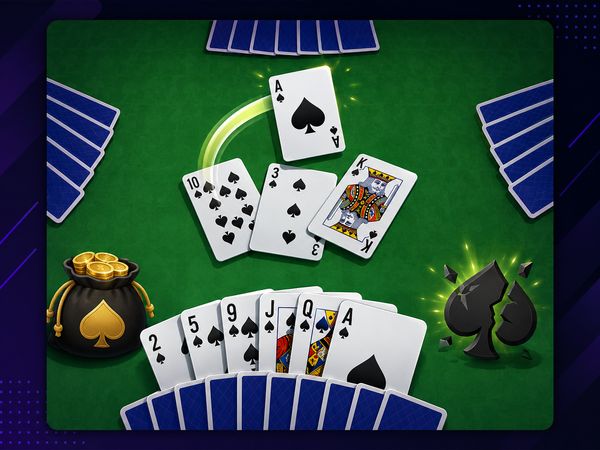
The leader plays one card, and everyone follows in turn. You must follow the led suit whenever you can. If you lack that suit, you may use another card, including a spade.
The highest card in the led suit wins unless a spade enters the trick. A spade then outranks every card from the other suits. If several spades appear, the highest spade wins.
Imagine hearts lead with the king. You hold no hearts but play the two of spades. That small trump defeats the king and wins the trick. If an opponent later plays the ace of spades, your two no longer controls the trick.
Following suit reveals information. Each discarded off-suit card shows a gap in that player’s hand. Track those gaps carefully. They may show where future trump tricks can appear.
When Spades Break
Spades cannot lead until a spade has already appeared in play. This event is called breaking spades. A player may also lead spades when holding only spades.
Suppose diamonds lead, and one player lacks diamonds. That player plays a spade, breaking the suit. On a later trick, any leader may choose spades.
Breaking timing changes the whole table. Hold a spade when you need control, but do not waste it before your team can use the opening.
Winning the Lead
The trick winner leads next. That privilege lets a team choose the next suit and shape the following contest.
Lead a side suit when you want partners to use strength. Lead spades after the break when trump control matters. Sometimes winning the lead matters more than taking another immediate trick.
Start a sharp round here, then test your timing against real opponents or computer play.
Scoring, Bags, and the 500-Point Race
Making Your Contract
Your team earns 10 points for every trick it bids and successfully takes. A team contract of six therefore earns 60 points when the team wins at least six tricks.
Extra tricks add bag points. They still help the score, but they do not replace the main contract reward. Missing the bid costs points instead, so a team must protect its promise from the first lead.
The standard race ends when a team reaches 500 points first. That target makes every round part of a larger plan. A small safe gain may beat a risky attempt at a huge total.
Check the score before bidding again. A team near the target may need only a modest contract. A team behind may accept more danger, but it still needs a realistic route through the hand.
Overtricks and Bags
Tricks above your team’s bid count as bags, also called overtricks. Bags add a small value now. They can quietly build across several successful rounds.
Too many bags trigger a large penalty later. That rule changes late-trick choices. If your team already has enough tricks, avoid grabbing needless extras when a safer discard or loss is available.
Track bags alongside points. A round can look successful while creating future trouble. Strong teams manage both totals at once.
Going Set
A team goes set when it fails to win its combined bid. The team loses points instead of receiving the promised contract reward.
That danger makes defensive play valuable. If opponents bid high, force them to spend winners early. If your own contract looks fragile, preserve cards that can secure the remaining tricks.
Do not assume a winning trick always belongs to your team. Read the contract, the lead, and the likely winner together.
Advanced Partnership Play
Reading Your Partner
Partner play starts with the bid, but it does not end there. A high bid suggests your partner expects control. A low bid may signal limited winners or a plan to support your contract.
Watch which suits your partner leads. Repeatedly leading one suit can show useful strength, though the table may force that choice. Notice when your partner wins a trick and which suit they select afterward.
Protect partner winners when opponents try to cut them off. If your partner leads a suit and you hold its highest card, avoid taking control too early unless the contract demands it. Let your partner keep the lead when that creates better choices.
Use discards as clues. When your partner cannot follow suit, their replacement card may reveal a shortage. That shortage can become useful later, because your partner may trump a side-suit lead.
Keep communication inside legal play. Do not signal with comments or gestures. Let bids, leads, wins, and discards carry the message.
Third-Seat Judgment
The third player often faces the hardest choice. You can win the trick, save a higher card, or let your partner’s card stand. Judge the contract before grabbing control.
If your partner leads a low card, an opponent may try to steal cheaply. Covering that attempt can protect the team. Yet taking the trick may force you to lead next, giving opponents a better suit.
Ask one question first: who benefits from the next lead? The answer often decides whether you should win now or pass.
Online Spades Modes and Variants
Browser Play
Player 1 uses the left mouse button to choose or play a card. The interface handles the table while you focus on bids, suits, and tricks.
Browser play suits quick rounds. You can settle into a familiar deal format without managing a physical deck. Keep the scoring visible, especially when bags begin to matter.
Take a moment before each click. A fast card choice can break spades, surrender a lead, or add an unwanted bag.
Solo and Multiplayer Options
Other builds support multiplayer tables, including private tables or ranked games.
Partnership play remains the classic focus. Solo options may change the table setup, so check the selected rules before bidding. Private tables work well when a known group wants one shared match.
Variant Rules You May See
Different versions may adjust the score target or offer alternate table settings. Some app builds also support offline play. These options do not change the core lesson: spades remain trump in the classic rules.
Check the rule panel before a new match. Confirm the target, scoring style, and player setup. Then adjust your bids instead of assuming every version scores identically.
Choose a format, make your opening bid, and keep the partnership race moving.
🎯 Fun Facts About Spades
- Some app builds offer 120, 500, or 750-point games.
✨ Key Features of Spades
- Four-player partnership play
- Standard 52-card deck
- Spades as permanent trump
- One-round bidding
- Team contract scoring
- 500-point win target
How to Play Spades
Step 1: Use the game controls
Use Left Mouse Button to choose / play card.
Step 2: Sort your hand by suit
Group your cards first, then look for aces, kings, and long suits. That gives you a realistic count before bidding.
Step 3: Bid your likely tricks
Estimate how many tricks your side can win together. Bid conservatively if your high cards are spread thin.
Step 4: Lead and follow suit correctly
The first player leads, and others must follow the suit if they can. If you cannot follow, you may play a spade or discard.
Step 5: Save trump for control
Do not spend spades too early unless the trick matters. Holding trump keeps you in charge when the hand tightens.
Step 6: Watch the contract and bags
Track whether your team is making the bid or drifting into extra tricks. Bags can help short term, but they can also cost points later.
Spades FAQs
How do you play Spades?
Spades is played with four players in two partnerships using a 52-card deck. Each player bids tricks, then tries to win at least that many while Spades stays trump and each hand is scored together.
Why is Spades considered a black game?
In actual play, the important point is that Spades is the permanent trump suit, not a color-based scoring rule.
What is the trick to winning Spades?
Win the tricks you bid, and avoid wasting trump early. Strong partners also watch bags closely, because overtricks can help now but hurt later.
How do you play classic Spades?
Classic Spades uses four players, two partnerships, and 13 cards each. Players bid once, follow suit if able, and use Spades to trump when they cannot follow or when trump control matters.
What is the best free online Spades game?
Several free browser versions are documented, including CardGames.io, AARP, Solitaired, and 247 Spades. The best choice depends on whether you want a clean browser table, multiplayer, or extra rule options.
Does Spades require a separate installation?
No. The browser version of Spades runs on the page without a separate installation.
Conclusion
Spades is a compelling trick-taking card game that rewards careful decisions and well-timed plays. Each trick adds tension as every card choice can affect the outcome.
Its signature Bags system makes overtricks matter: extra tricks above the bid count help at first, but collecting too many brings a large penalty later. Breaking Spades adds another layer of timing, since spades generally cannot be led until one has been played. Choose and play cards with the left mouse button, read the hand carefully, and decide when to introduce trump. Play Spades here on this page and discover the strategy for yourself.

No comments yet. Be the first to share your thoughts!