Clash of vikings turns a Viking kingdom duel into a three-minute tactical sprint. You summon warriors, place them on the battlefield, and push toward one enemy kingdom. Every card matters because the clock keeps moving.
The game blends card choices with direct battlefield placement. You do not simply pick a deck and watch events unfold. You choose the moment, position, and direction of each attack while trying to break through enemy defenses.
Read the field, manage your magic points, and commit before time runs out. Play Clash of vikings online here when you want a quick battle with immediate tactical pressure.
Clash of vikings Core Battle Loop
Three-Minute Matches
Each Clash of vikings match lasts three minutes. That short limit shapes every decision from the opening summon onward. You need to build pressure, defend your own position, and damage the enemy castle before the clock reaches zero.
The duel centers on one enemy kingdom. Your Vikings advance across the battlefield toward its castle or base. The opposing side creates the threat you must answer, so every attack also carries a defensive question: can you keep your push alive when enemy units appear?
Short matches leave little room for idle planning. A careful opening helps, but a slow setup can waste the best part of the battle. Watch your available magic points and prepare a useful sequence instead of placing cards without a clear purpose.
The timer also changes how you judge success. A small attack may create space for a stronger unit later. A large push may reach the castle quickly, but it can leave your side exposed. Keep the main objective in view: deal enough damage to destroy the enemy castle before the match ends.
Summon, Place, Attack
The opening loop stays clear. Choose a battle card, spend the required magic points, and place the hero or unit on the battlefield. Your placement starts the attack and determines where that pressure begins.
Use each summon with a target in mind. Send units toward the enemy castle, support an active push, or answer pressure near your own side. Then watch the fight and decide whether your next card should add force or change the attack angle.
Card Choice and Magic Points
Saving for the Right Unit
Battle cards give Clash of vikings its planning layer. You choose which hero or unit to summon, then decide when that card deserves a place on the field. The strongest choice is not always the card you can use immediately.
Magic points control that timing. Spending every point at once may create early activity, but it can also remove your next option. Saving points gives you room to respond when the enemy starts a push or when a better attack window opens.
Think in short sequences rather than isolated plays. A low-cost card may begin pressure, while a stronger unit arrives after you save enough magic points. That sequence can produce a more useful attack than several unrelated summons.
Saving does not mean refusing to act. It means protecting your next decision. If the enemy has already committed units, hold enough magic points to answer them. If the lane looks open, save for the unit that can turn progress into castle damage.
Watch the battle before selecting another card. Your best option can change within seconds. A card that looked perfect at the start may waste time after the enemy shifts pressure elsewhere.
When Cheap Plays Matter
Cheap plays still have a clear role. They let you place a unit without waiting through a long resource gap. That can keep an attack moving or give you something useful while stronger cards remain out of reach.
Use a lower-cost summon when it supports the current moment. Do not spend it only because magic points are available. A small unit should help maintain pressure, answer danger, or prepare the field for a stronger card.
Clash of vikings Battlefield Targets
Castle Damage Priority
The enemy castle is the central target. Destroy it to win the battle. Every successful deployment should help you reach that goal, protect a unit moving toward it, or create an opening for direct damage.
Target order affects how quickly a push becomes a victory. If your units can reach the castle, direct pressure may finish the match sooner. If defenses block that path, clear the immediate threat first and preserve enough force for the next advance.
Do not confuse activity with progress. A crowded battlefield means little if your units never threaten the castle. Check where your summons are moving and whether each placement improves the attack.
Castle damage also gives your short match a clear direction. You cannot spend the entire duel building a perfect army. Start with a workable push, then adjust it as the enemy responds.
Guard Tower Pressure
Pressure the guard towers when they block your advance. If a route already opens toward the castle, keep your units focused there. The right target depends on distance, enemy resistance, and the time left on the clock.
Choose quickly. Attacking every target at once can split your force and slow castle damage.
Start playing Clash of vikings here and test how quickly you can turn one clean push into a winning attack.
Hero Placement and Tactical Timing
Reading Enemy Pressure
Clash of vikings asks for more than card selection. You also decide where each hero or unit enters the fight. That placement gives every card a tactical role, even when the same card appears in different situations.
Read the battlefield before you drop a unit. Look for the area receiving enemy pressure, the route toward the castle, and any gap that could support an attack. A summon placed in the wrong area may arrive too late to matter.
Enemy pressure can change your plan quickly. An open route invites an advance, while a crowded route may call for patience. Keep your magic points in mind as you read those changes. You need enough resources to keep the plan alive after the first placement.
Placement also controls timing. A hero entering too early may face the full enemy force. The same hero arriving after another unit creates space can move farther and threaten the target sooner.
Dropping Units at the Right Moment
Wait for a useful opening, then act with purpose. Place a unit where it can join an attack, answer enemy pressure, or move directly toward the castle.
Do not delay when the route is clear. The three-minute limit rewards decisions that arrive while they still matter. A well-timed summon can change the shape of the fight before the enemy rebuilds pressure.
Playing Clash of vikings on Browser and Mobile
HTML5 Compatibility
Clash of vikings uses mobile-friendly HTML5 technology. The game runs directly in the browser, with cross-device play presented for desktop, tablet, and phone use on supported pages.
That format keeps the battle easy to start. You do not need a separate game client to reach the card battle. Open the page, let the HTML5 game load, and begin the match from the available menu.
Mouse controls suit desktop play. Use Left Click to select cards and place units, or choose menu options. Keyboard users can use the Arrow Keys to navigate menus, Enter to confirm a selection, Space to start or continue, and Esc to pause or back out.
On a smaller screen, focus on clear touches and quick choices. The core actions remain the same: select a card, place a unit, and watch the battlefield.
No-Download Access
You can start from the game page and move straight into the Viking battle after loading.
This suits short sessions. When you have a few minutes, the three-minute match gives you a complete tactical challenge without installing extra software.
What the Match Tempo Demands
Fast Openings
The first moments set your tempo. A slow opening costs more than time; it also gives the enemy room to shape the battlefield first. Choose a useful card, place it with a clear target, and begin creating pressure.
Do not rush blindly. Fast play works when each action supports the next one. Spend enough magic points to start, but keep your next option in mind.
A good opening answers three questions quickly. Where should your first unit enter? Which target deserves pressure? How much magic should remain after the deployment?
Use the early clock to learn the enemy’s approach. Then adjust your placement before the battle becomes crowded. Wasted deployments leave fewer chances for a meaningful push later.
Late Push Decisions
Late in the match, every summon needs a direct purpose. Attack the castle when the route opens, or place a unit where it can support the final push.
Do not spend the last moments on a setup that cannot reach the target. The clock punishes hesitation. Commit to the strongest available line and use your remaining magic points before time closes.
Questions Players Ask About the Game
What the Game Is
Clash of vikings is a card-based tactical battle game released in 2017. You summon Vikings against one enemy kingdom, place heroes or units on the battlefield, and attack the enemy castle.
Matches last three minutes. That limit makes card choice, magic point management, and tactical deployment central to every duel.
Where It Runs
Its mobile-friendly design supports play across desktop, tablet, and phone devices on supported pages.
Use Left Click for cards, units, and menus. Arrow Keys, Enter, Space, and Esc handle the verified keyboard actions.
Platform Confusion
Clash of vikings is commonly presented as browser play. The important experience stays consistent: choose cards, manage magic points, place Vikings, and attack the enemy castle.
Device size can change how the controls feel, but not the core battle loop. Start the HTML5 game in your browser and make each three-minute decision count.
✨ Key Features of Clash of vikings
- Three-minute matches
- Card-based battles
- Hero placement
- Enemy castle destruction
- Magic point management
- Tactical deployment
How to Play Clash of vikings
Step 1: Use the game controls
Use Arrow Keys to navigate menus. Use Enter to confirm selection. Use Space to start or continue. Use Esc to pause or back out.
Step 2: Start the match
Load the game and begin a new battle against the rival Viking kingdom.
Step 3: Pick battle cards carefully
Choose cards that fit your current magic point total and the pressure on the field.
Step 4: Place heroes on the battlefield
Deploy heroes where they can pressure the enemy castle or defend your own side.
Step 5: Watch the three-minute timer
Use the short match length to decide when to spend quickly and when to hold back.
Step 6: Push for the enemy castle
Keep building pressure until you can break the castle and finish the match.
Clash of vikings FAQs
What are the basic controls for Clash of vikings?
Browser keyboard: Arrow Keys — navigate menus; Enter — confirm selection; Space — start or continue; Esc — pause or back out. Browser mouse: Left Click — select cards and place units; Left Click — choose menu options.
Is there a movie called Clash of the Vikings?
That search phrase does not describe this game. The evidence here points to a browser strategy title, not a film or episode series.
Conclusion
Clash of vikings delivers a focused card-based tactical battle in a convenient browser format. Its single-player mode keeps the experience centered on your decisions, while the HTML5 technology makes it easy to start playing without leaving the page. The combination of cards and tactical choices gives each moment a clear purpose and keeps the action engaging.
Choose cards and place units with the left mouse button, or navigate menus with the Arrow Keys, confirm with Enter, start or continue with Space, and pause or back out with Esc. Simple controls let you concentrate on the battle rather than complicated inputs. Experience Clash of vikings for yourself and play right here on this page.
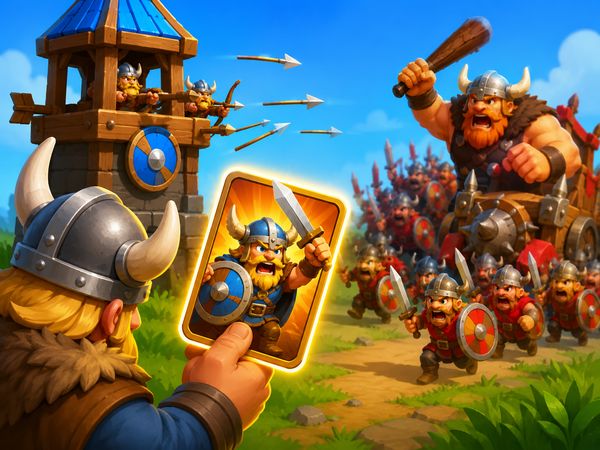
Clash of vikings Game Image

No comments yet. Be the first to share your thoughts!