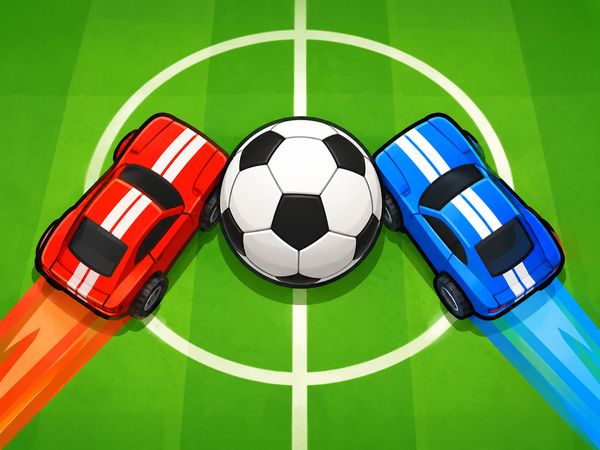
Mini car ball turns car control into a fast goal race, with every bump changing who reaches the ball first. This 2D top-down car-soccer game rewards sharp turns, smart boosts, and quick reads. You are not just driving around the arena. You are fighting for space before the timer ends.
Small errors matter. A wide turn can give the opponent a clear run. A badly timed boost can send your car past the ball. Learn to approach from useful angles, protect the goal mouth, and keep your car ready for the next touch.
Mastering Mini car ball Movement and Boost Timing
Steering the Car Cleanly
Start with controlled movement, not constant turning. In a top-down arena, your car’s approach angle decides where the ball travels next. Aim slightly ahead of the ball rather than driving straight toward its current position. This helps you meet it with your front side and keeps your next move open.
Use short steering corrections near the ball. Large turns often carry you away from the play. When defending, line up between the ball and your goal. When attacking, approach from the side so your touch moves the ball toward a useful lane. Keep watching the opponent, too. A direct route may look fastest, but it can also lead straight into a challenge.
Practice changing direction before contact. That habit makes your car harder to read and gives you more control after each touch. Good movement feels calm, even when the match moves quickly.
Using Boost at the Right Moment
Save boost for a clear purpose. Use it to reach a loose ball, close a defensive gap, or finish a promising attack. Boosting across the arena without a target usually removes your chance to react.
Trigger boost just before the important movement, not long before it. A short burst can win a race to the ball or turn a normal approach into a strong challenge. After contact, release it and regain control. Speed helps most when your direction already makes sense.
Recovering After Collisions
Collisions can change possession instantly. Do not keep forcing the same direction after contact. Reorient your car, check the ball’s new path, and choose the shortest useful route.
If the ball moves toward your goal, recover inside the goal area first. If it travels loose, take a cleaner angle instead of rushing blindly. A quick reset often beats a desperate second hit.
Reading the Ball and Creating Scoring Angles
Bump, Block, and Redirect
Chasing the ball directly creates predictable play. Read its movement first. Ask where it will arrive, then drive toward that meeting point. This turns your car into a tool for shaping the play instead of a vehicle following behind it.
Use a bump to change the opponent’s route or force space around the ball. Use a block when the opponent has a clear path toward your goal. Position your car across that path, then make contact at the right moment. Even a small touch can break an attack and leave the ball available for your next move.
Redirect the ball with purpose. A touch toward the side may create a better angle than a touch straight ahead. Look for open space before you commit. If the opponent sits between you and the goal, move the ball away from that pressure first. Then circle around and attack from a new line.
Watch the car, not only the ball. The opponent’s direction reveals the next challenge. If they rush forward, let them overextend and guide the ball past them. If they wait near the goal, use a side approach and avoid handing them an easy clearance.
Every touch should answer one question: where does the next touch happen? That mindset makes your movement more deliberate. It also helps you keep possession after a messy collision.
Finishing Into an Open Net
Check the goal before striking. An open net needs a clean, simple touch rather than maximum speed. Approach from an angle that points the ball away from the defender and toward the widest space.
If your car reaches the ball first, slow your approach slightly. This gives you time to aim. A rushed hit may send the ball across the goal mouth instead. Finish quickly when the lane is clear, then prepare for the restart and the next attack.
Field Positioning, Defense, and Counterattacks
Holding the Center Line
The center line gives you access to both goals. Hold a position near it when the ball sits between attacks. You can move forward quickly, yet still turn back when the opponent gains control.
Do not park directly on the ball. Stay close enough to challenge, but keep room for a steering correction. This makes your car useful in either direction. When the ball moves wide, shift with it while protecting the route back to your goal.
Center control also improves counterattacks. You spend less time crossing the arena. One clean touch can become a scoring run when your car already starts near the play.
Defending the Goal Mouth
Protect the space directly in front of your goal. Track the ball’s angle and place your car where the next shot must travel. Avoid chasing the opponent into a corner if the ball stays harmless there.
Challenge when the ball enters your danger area. A firm block can stop the shot before it develops. After the stop, turn outward rather than straight back into pressure. That direction gives your next clearance more room.
Turning Stops Into Breakaways
React immediately after a defensive stop. Move into the open lane while the opponent turns around. Carry the ball away from danger with one controlled touch.
Boost only when the route stays clear. A fast counterattack works because you gain space, not because you rush every move.
Ready for a faster goal race? Start Mini car ball here and put these positioning tips into action.
Mini car ball Controls Across Browser Builds
Keyboard Movement Keys
Mini car ball supports two verified keyboard movement sets. Use WASD to move the car, or use the Arrow Keys to move it. Pick the set that feels most natural before the match becomes busy.
Keep your fingers relaxed. Clean inputs matter more than frantic tapping. Practice small direction changes around the ball, then repeat them while defending. Consistent movement helps you judge when to turn and when to hold your line.
Boost and Turbo Inputs
The verified boost or turbo inputs are Shift, Enter, and Space. Use the available input that feels comfortable with your movement hand.
Test the response before relying on it during a close attack. A boost input should support a planned move, such as reaching the ball or closing a gap. Keep your steering steady while using it.
Player 1 and Player 2 Bindings
Use the controls shown by the current game screen.
Scoring Pressure, Timer Management, and Match Decisions
Playing the Clock
The timer changes the value of every decision. Early in the match, choose controlled touches and learn the opponent’s routes. You have time to build pressure without forcing a risky shot.
As the clock runs down, count goals before choosing your approach. If the score stays close, protect your position and attack when the ball offers a clear lane. A single mistake can decide the goal race, so avoid needless collisions near your own goal.
When behind, shorten your decision time. Move toward useful space and challenge earlier. When ahead, make the opponent travel farther before they reach a scoring angle.
When to Attack Aggressively
Attack hard when the opponent leaves the goal mouth or loses control of the ball. Use the open lane before it disappears. A quick boost can turn that gap into a shot.
Do not attack simply because the clock feels tense. Commit when your car has a clear route and the ball sits within reach. Pressure works best with direction.
Protecting a Narrow Lead
A small lead demands patience. Keep your car between the ball and your goal whenever possible. Clear the ball toward space, not back into the opponent’s path.
Choose safe touches near the end of the timer. Avoid chasing a second goal if the attempt would expose your goal mouth. Make the opponent solve the final attack instead.
Compare with Similar Games
| Game |
Why Similar |
| Football bros |
Both games use a one-on-one sports match where the objective is to score goals against an opponent before time runs out. |
✨ Key Features of Mini car ball
- 2D top-down car soccer
- Quick Match
- Local multiplayer
- Boost or turbo
- Browser play
- Timed matches
How to Play Mini car ball
Step 1: Set up your car
Use the browser build’s starting options if shown, then get ready for the kickoff. Keep your first move simple and stay near the ball.
Step 2: Boost only with purpose
Press Shift, Enter, or Space to use boost or turbo. Save it for clean hits, recovery, or a fast break.
Step 3: Defend the goal line
Stay between the ball and your net when under pressure. If the ball pops loose, turn immediately and counterattack.
Mini car ball FAQs
What is the car ball game called?
The game is called Mini Car Ball. It is a 2D top-down car-soccer game where tiny cars chase a ball into the opponent’s goal.
What is the game with the car and the ball?
That is Mini Car Ball. The core idea is simple: drive, bump, and score in short matches against the computer or another player.
Conclusion
Mini car ball delivers a straightforward and enjoyable racing game experience directly in your browser. Moving the car is simple with either WASD or the Arrow Keys, while Shift, Enter, or Space activates turbo or boost. This accessible control setup lets you focus on steering and making the most of each race.
With both Singleplayer and Multiplayer modes available, Mini car ball offers flexible ways to enjoy its racing action. Whether you prefer playing independently or competing in Multiplayer, the game is easy to start and inviting to return to. Experience Mini car ball for yourself and play it right here on this page.

No comments yet. Be the first to share your thoughts!